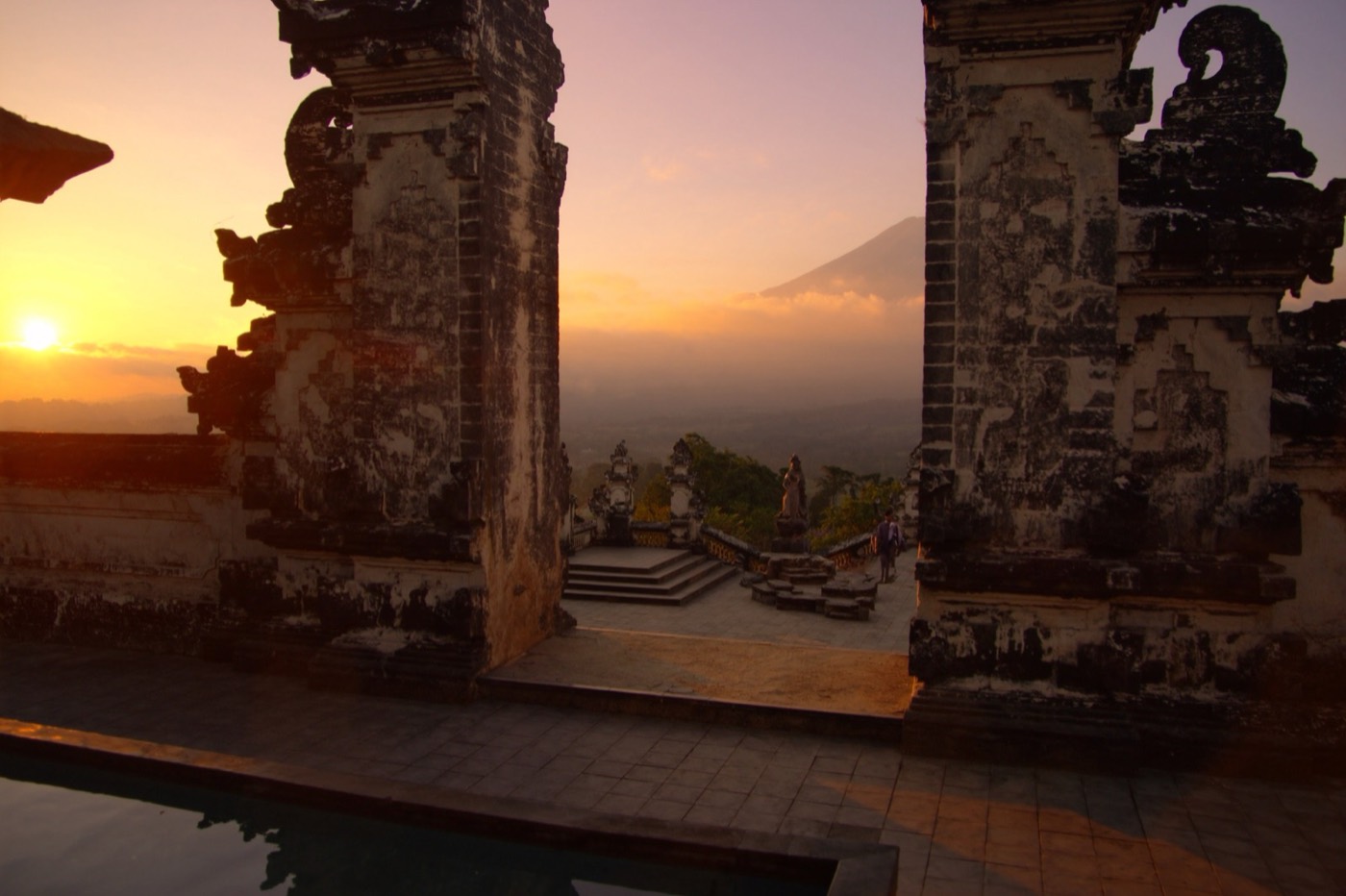
Ubud
Central Bali
- Known for
- Rice fields, temples, art, yoga and very good food. No beach.
- Good for
- Culture lovers, couples, first-timers, walkers. Closest to most of our tours.
Your local guide to Bali, Indonesia: the most beautiful places on a map, the best time to visit, where to stay, temples, culture and a few words of Balinese. Written by a Balinese host from Tampaksiring near Ubud.
The places from our tours, plus a few landmarks for orientation. Tap a number to read about it. Driving times on Bali are longer than the distances suggest, so we plan days around one region.
Bali is warm all year, around 30 °C by day near the coast. What changes is the rain. The dry season runs from April to October, the wet season from November to March. In the wet season it usually rains hard for an hour or two in the afternoon and is sunny the rest of the day, so tours run all year.
Dry, sunny and less humid. The best time for Mount Batur, Nusa Penida and the waterfalls. July and August are the busiest months.
My favourite months: mostly dry, green after the rains, and quieter than high season.
Short tropical showers, very green rice fields, full waterfalls and a relaxed, quiet island. On windy days we simply move Nusa Penida to another date.
These are approximate long-term averages for Denpasar on the south coast, for orientation only. The actual weather on your travel days can be quite different and is not something we can promise. Up in Kintamani and Bedugul it is usually 6 to 10 °C cooler, so bring a jacket for the Batur sunrise. The sea stays around 27 to 29 °C all year.
| Month | Day °C | Night °C | Rain mm |
|---|---|---|---|
| Jan | 31 | 24 | 345 |
| Feb | 31 | 24 | 274 |
| Mar | 31 | 24 | 234 |
| Apr | 32 | 24 | 88 |
| May | 31 | 24 | 93 |
| Jun | 30 | 23 | 53 |
| Jul | 29 | 23 | 55 |
| Aug | 30 | 23 | 25 |
| Sep | 30 | 23 | 47 |
| Oct | 31 | 24 | 63 |
| Nov | 31 | 24 | 179 |
| Dec | 31 | 24 | 276 |
Bali looks small on the map, but the traffic is slow, so where you sleep shapes your trip. Many guests split their stay: three or four nights in Ubud for culture and rice fields, then a few nights by the sea. We pick you up anywhere on the island.
Central Bali
South-east coast
South-west coast
South-west coast
Near the airport
South, by the airport
South-east tip
Southern cliffs
East coast
East, inland
Northern highlands
North coast
Small island off Sanur
July and August are the busiest months, followed by the Christmas and New Year weeks. Indonesian visitors add to the crowds during the school holidays from late June to mid July and around Eid, whose date moves every year. January to March and the start of May are the quietest, and May, June and September give you dry weather with fewer people.
Rounded, approximate monthly arrivals of foreign visitors to Bali in 2019, based on figures from Badan Pusat Statistik Bali, for orientation only. Real numbers change from year to year and from place to place.
| Month | Visitors × 1,000 |
|---|---|
| Jan | 455 |
| Feb | 437 |
| Mar | 450 |
| Apr | 477 |
| May | 487 |
| Jun | 550 |
| Jul | 604 |
| Aug | 602 |
| Sep | 590 |
| Oct | 568 |
| Nov | 498 |
| Dec | 552 |
Indonesia has more than 17,000 islands, and most of its people are Muslim. Bali is different. Here, nearly nine in ten people follow Balinese Hinduism, a faith that sees the divine in everything: in the mountains and the springs, in the rice fields and in the sea.
That's why Indonesians call it Pulau Dewata, the Island of Gods. There are more than 20,000 temples on an island you can cross by car in a day. Every village has its temples, every family home has its shrine, and every morning countless small offerings of flowers and incense are laid out with care.
The Balinese read their island like a sacred map. The high mountains, Mount Agung above all, are the home of the gods. The sea is the world below, and people live in between. Houses, temples and villages are arranged to keep these worlds in balance, and many Balinese even sleep with their head towards the mountain.
The gods are not far away here. They are invited in, every single day.
About four thousand years ago, seafaring people arrived from the north and began growing rice in Bali's rich volcanic soil. More than a thousand years ago, farmers had already created subak, a way of sharing water from temple to temple and field to field so that everyone gets their part. It still works today, and UNESCO counts it among the treasures of the world.
Hindu and Buddhist ideas reached the island from India by way of Java. When the great Javanese kingdom of Majapahit faded around the year 1500, many of its priests, poets, dancers and craftsmen came to Bali. They brought their stories, their music and their skills, and Bali has kept them alive ever since.
Later came Dutch ships and the colonial years, and in 1945 Bali became part of the young Republic of Indonesia. In the 1920s and 1930s, painters and musicians from Europe and America fell in love with Ubud and stayed for years. Their paintings and letters made the whole world curious about a small island with a very big culture.
Ask people who have been here what they remember most, and they often talk about the mornings: a woman placing an offering on her doorstep, the smell of incense and frangipani, a gamelan practising somewhere behind the rice fields.
Culture in Bali is not a show for visitors. It's everyday life. Ceremonies fill the streets, whole villages dress in white and gold, and many children learn to dance and play the gamelan from a young age. You don't have to search for it. It finds you.
And then there's the island itself: volcanoes and crater lakes, rice terraces like green staircases, waterfalls deep in the jungle, black and white beaches and a sea full of life. All of it within a day's drive, and all of it looked after by people who believe it is sacred. That, more than anything, is why Bali feels like nowhere else.
You don't have to search for it. It finds you.
Most Balinese follow Agama Hindu Dharma, a mix of Hinduism from India and Java with much older local beliefs about ancestors and nature. The idea behind it is Tri Hita Karana: balance between people and God, people and each other, and people and nature.
Small palm-leaf baskets with flowers, rice and incense, placed on shrines, doorsteps and car dashboards every morning. They're walked around with care, and they make every street smell of flowers.
Every village has at least three temples, every family compound has its own shrine, and there are over 20,000 temples on the island. Each one holds an anniversary festival, odalan, every 210 days.
Balinese New Year, usually in March. For 24 hours nobody works, travels or lights a fire, the airport closes and even tourists stay in their hotels. The night before, giant ogoh-ogoh monsters are paraded and burned.
Every 210 days, families celebrate the victory of good over evil. Tall bamboo poles called penjor line every street for ten days.
Most Balinese are named by the order they were born: Wayan, Made, Nyoman, Ketut. I'm a Komang, which is another name for the third child.
Balinese has polite and everyday forms. These are the polite ones, so they're always safe to use. People will be delighted if you try. Indonesian is understood everywhere too, so it's in the second column.
| Balinese | Indonesian | Meaning |
|---|---|---|
| Om Swastiastu | Halo / Selamat pagi | Hello, the Balinese Hindu greeting |
| Rahajeng semeng | Selamat pagi | Good morning |
| Rahajeng wengi | Selamat malam | Good evening |
| Kenken kabare? | Apa kabar? | How are you? |
| Becik | Baik | Good, I'm fine |
| Wastan tiang … | Nama saya … | My name is … |
| Suksma | Terima kasih | Thank you |
| Suksma mewali | Sama-sama | You're welcome |
| Nunas … | Tolong / Minta … | Please, may I have … (asking for something) |
| Durusang | Silakan | Please, go ahead (offering something) |
| Nggih | Ya | Yes |
| Ten | Tidak | No |
| Ampura | Maaf / Permisi | Sorry, excuse me |
| Aji kuda? | Berapa harganya? | How much is it? |
| Jaen pesan! | Enak sekali! | Very tasty! |
| Pamit dumun | Permisi dulu | I'm leaving now, goodbye |
| Om Shanti Shanti Shanti Om | Damai, damai, damai | Peace, peace, peace. A respectful closing |
Balinese people welcome visitors with real warmth. A few small gestures show that you value their home, and they are always noticed and appreciated. The Governor of Bali also shares a friendly guide for visitors (Surat Edaran Gubernur Bali No. 4 Tahun 2023).
The dry season from April to October is the best time to visit Bali. May, June and September are dry and less crowded than the peak months of July and August.
From November to March it usually rains hard for an hour or two in the afternoon and is sunny the rest of the day. Rice fields are greenest and waterfalls fullest, and day tours run all year.
Many first-time visitors split their stay: three or four nights in Ubud for temples, rice terraces and culture, then a few nights by the sea, for example Sanur for families, Seminyak for couples or Uluwatu for ocean views.
Bali is called the Island of Gods, Pulau Dewata, because nearly nine in ten Balinese follow Balinese Hinduism. The island has more than 20,000 temples, and families place small flower offerings, canang sari, every morning.
Yes. Since 2024, foreign visitors pay a tourist levy of IDR 150,000 per person, used to protect Bali's culture and nature. Visa rules change often, so check the official Indonesian immigration website before you travel.
Wear a sarong and a sash, and cover your shoulders and knees. Most temples lend sarongs at the entrance.
Message Resgian Bali Tour on WhatsApp (+62 877-6252-7048) with your dates and wishes. I Komang, a local Balinese host from Tampaksiring near Ubud, plans the day with you, picks you up at your hotel anywhere in Bali, and you pay in cash after the tour.
Tell me which part of the island you're curious about and I'll plan the day around it.